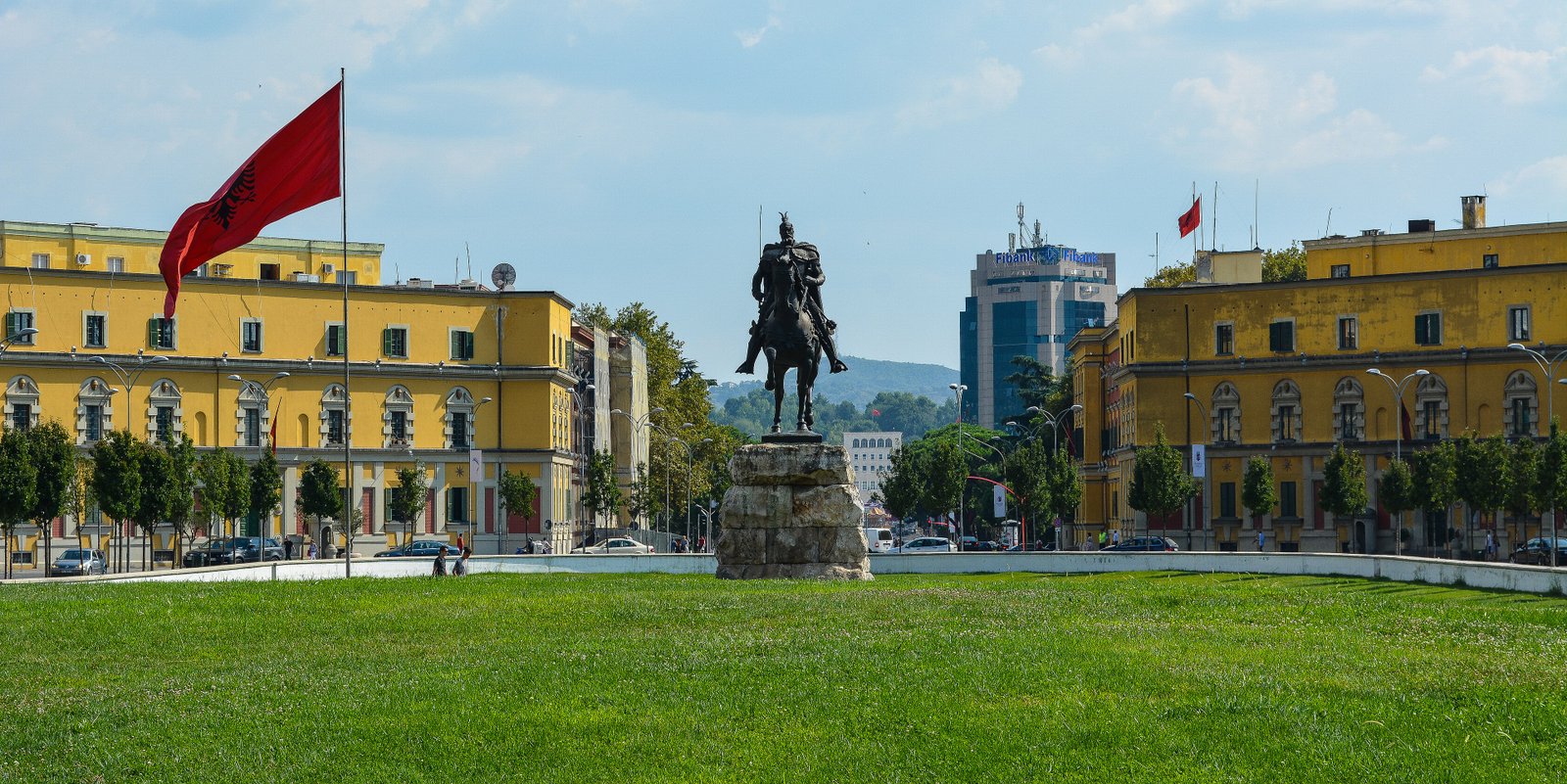
Not long ago, Albania barely featured in conversations about where to relocate abroad. Today it is showing up in expat forums, nomad Slack channels, and cost-of-living spreadsheets with increasing regularity. The reasons are not hard to understand: Tirana is one of Europe's most affordable capitals, the weather is excellent, the food is genuinely good, and the country's residency system — while not without its paperwork — is designed to welcome people who want to stay. Whether you are a remote worker, a retiree, an entrepreneur, or simply someone who wants to try something different, Albania has a path in for you.
This guide covers everything you need to know in 2026: the different residence permit types, the exact application process, documents required, costs, typical timelines, and the practical realities of settling into daily life here. Let's start with the basics that trip up most newcomers.
Albania and the Schengen zone: understanding your starting position
The single most important fact for any would-be Albania expat is this: Albania is not a member of the European Union, and it is not part of the Schengen Area. This has two significant practical implications.
First, the good news: citizens of the US, UK, EU member states, Canada, Australia, and most other Western countries can enter Albania visa-free and stay as tourists for up to 90 days without any paperwork. No visa application, no pre-approval. You simply arrive, your passport is stamped, and you are free to explore the country for up to three months.
Second, the important caveat: if you want to stay beyond that 90-day tourist window — or if you want to legally work, run a business, or establish formal residence — you need a residence permit. Unlike neighbouring EU countries, where residence rights for non-EU citizens can be complex and expensive, Albania's process is comparatively accessible. But it does require proper documentation, a visit to the right government office, and some patience.
It is worth noting what you cannot do: you cannot simply do the "border run" strategy of leaving and re-entering every 90 days indefinitely. Albanian immigration authorities are aware of this practice, and repeated short entries with no residence permit will eventually attract scrutiny. If Albania is to be your home — even part-time — getting legal is the correct approach, and in most cases it is not as difficult as people fear.
Types of Albanian residence permit in 2026
Albania offers several distinct residence permit categories, each suited to different circumstances. Understanding which one applies to you is the first and most important step in the process.
1. Employment-based residence permit
If you have a job offer from an Albanian company or organisation, the employment-based residence permit is your route. Your employer typically initiates part of the process, obtaining a work authorisation through the National Employment Service (Shërbimi Kombëtar i Punësimit) before you can apply for the residence permit itself. This permit is tied to your employer, so if you change jobs, you will need to update your permit. It is renewable annually and the most commonly issued permit category.
2. Self-employed and business permit
Albania makes it relatively straightforward for foreign nationals to register a business. The most common structure for freelancers and small operators is a person fizik (sole trader) registration, which can be completed at the National Business Centre (QKB) in a matter of days. Once you have your Albanian business registration number (NIPT), you can apply for a residence permit as a self-employed person. Many expats who do freelance work for foreign clients choose this route as it provides a formal legal basis for their stay and creates a clean structure for tax purposes.
3. Property owner permit
Albania allows foreign nationals who own property in the country to apply for a residence permit on the basis of that ownership. With Tirana apartment prices still dramatically below Western European levels, this has become an attractive option: buying a small apartment can simultaneously provide accommodation and legal residence. The property must be properly registered in your name with a notarised deed (tapu), and you will still need to show proof of sufficient income to support yourself.
4. Family reunification
If your spouse, partner, or parent is an Albanian citizen or holds a valid Albanian residence permit, you can apply for a family reunification permit. This permit mirrors the duration of the sponsoring family member's status and requires proof of the qualifying relationship — marriage certificate, birth certificate, or similar — translated into Albanian and notarised.
5. Digital nomad and remote worker permit
Albania was one of the earlier Balkan countries to formalise a pathway for digital nomads — people who earn their income remotely from employers or clients based outside Albania. This permit is specifically designed for non-EU citizens working for foreign companies or as freelancers with foreign clients. It does not entitle the holder to work for Albanian companies, but it provides a fully legal basis to live in Albania while working remotely. Income requirements are not formally legislated at a single fixed threshold, but immigration lawyers consistently recommend demonstrating at least €2,000 per month in verifiable remote income to avoid any issues.
The application process, step by step
Regardless of which permit type you are applying for, the core process follows a similar path. The steps below reflect the standard procedure as of 2026.
Required documents: the complete checklist
The exact document list varies slightly by permit type, but the core requirements are consistent across all categories. Gather these before you head to the DPSHTF to avoid having to make multiple trips.
- Valid passport with at least six months' validity remaining beyond your intended stay. Bring both the original and photocopies of the data page and any visa stamps.
- Proof of income or financial means. For remote workers, this means bank statements showing regular deposits (typically three to six months of statements) and/or an employment letter from your foreign employer confirming your salary and the remote nature of your work. For self-employed applicants, accountant-certified income statements or client contracts work well.
- Private health insurance policy valid in Albania, showing coverage of at least €30,000. Public healthcare in Albania is limited and not reliably accessible to non-residents; a comprehensive international health insurance policy is not just an application requirement but genuinely necessary.
- Rental contract or property deed. Your rental contract should be formally notarised and, where possible, registered with the tax authority (a requirement in Albanian law, though often honoured in the breach). Property owners should bring their notarised tapu.
- Two recent passport-sized photographs against a white background, meeting standard biometric requirements.
- Completed application form, available at the DPSHTF office or downloaded from the Albanian government's e-Albania portal (e-albania.al).
- Address registration certificate (regjistrim i adresës) from your local municipality, confirming your Albanian address is formally registered.
- Permit-specific documents: employment contract (employment permit), NIPT business registration (self-employed permit), marriage/birth certificates (family reunification), property deed (property owner permit).
Documents issued in foreign languages must be translated into Albanian by a certified sworn translator and notarised. This is not optional — untranslated documents will be rejected. Several translation services in Tirana specialise in immigration documents and can turn around standard translations within 24–48 hours.
Costs and fees
Albania's residence permit fees are genuinely low by any international comparison. The standard application fee is approximately 3,000 ALL (roughly €28), paid at a cashier window at the DPSHTF or at the post office (Posta Shqiptare). There may be additional processing fees depending on the permit type, typically in the range of 5,000–10,000 ALL (€46–92). The biometric ONE Albania Card itself carries a separate issuance fee of around 2,500 ALL (€23).
Beyond the government fees, budget for the following:
- Certified translation of documents: approximately 2,000–3,000 ALL (€18–28) per document
- Notarisation: 1,000–2,000 ALL (€9–18) per document
- Immigration lawyer (recommended for first-time applicants): fees typically range from €150–400 for the full application support
- Health insurance: international policies for Albania typically cost €600–1,500/year depending on age and coverage level
In total, a first-time applicant should budget approximately €200–600 in administrative costs for a straightforward application, excluding legal fees. This is well below the cost of comparable residence applications in EU countries.
The ONE Albania Card
Albania's biometric residence permit is issued in the form of the ONE Albania Card — a chip-embedded card that contains your biometric data (fingerprints and photograph), personal information, and permit details. It serves as your official proof of legal residence and is required when opening bank accounts, registering with utilities, and dealing with government services.
The card is produced centrally and typically takes 15–25 days after application approval to be ready for collection. You will be notified when it is available. Bring your passport and collection receipt when you go to pick it up.
Processing times: what to realistically expect
The official processing time for Albanian residence permits is 30 days from the date of complete application submission. In practice, most applications take between 30 and 60 days, and some can stretch to 90 days during busy periods or if additional documents are requested. If you apply close to the expiry of your 90-day tourist entry, you may wish to consult a lawyer about maintaining legal presence during the processing period — in most cases, a pending application provides a degree of protection, but this is worth confirming.
One practical tip from experienced expats: submit your application well within your 90-day window — ideally at or before the six-week mark. This gives you buffer time for document requests and processing delays without the pressure of an expiring tourist stamp.
Banking, healthcare, and practical life in Albania
Once your residence permit is in hand, the practical structure of Albanian life becomes considerably more accessible.
Banking. Opening an account with one of Albania's main commercial banks — Raiffeisen Bank Albania, Banka Kombëtare Tregtare (BKT), or Credins Bank — typically requires your passport and residence permit card. Raiffeisen and BKT are generally regarded as the most foreigner-friendly, with English-speaking branch staff in Tirana and modern online banking platforms. Bank transfers in and out of Albania work smoothly with SWIFT, though be aware that Albania is not yet part of SEPA, so international transfers carry the standard foreign exchange fees.
Healthcare. Albania's public healthcare system (ISKSH) is accessible in principle to residents who contribute to the social insurance system, but in practice most expats — and most Albanians — use private medical providers for any serious healthcare need. Private clinics and hospitals in Tirana are generally good quality at a fraction of Western European prices. Maintain your international health insurance policy throughout your time in Albania.
Tax residency. Albania applies a 183-day rule for tax residency: if you spend more than 183 days in Albania in a calendar year, you become an Albanian tax resident and your worldwide income is in principle subject to Albanian tax. Albania's personal income tax system uses a progressive structure with rates significantly below Western European norms — the top rate of 23% applies only above approximately 150,000 ALL per month (roughly €1,400). For most digital nomads, this is a financially attractive position. See our companion article on Albanian tax for the full breakdown.
Cost of living. Tirana consistently ranks among Europe's most affordable capitals. A comfortable expat lifestyle — renting a modern apartment, eating out regularly, using ride-shares, and covering all living expenses — typically costs between €600 and €900 per month. A budget of €1,200–1,500 per month provides a very comfortable life including travel and leisure. Central Blloku neighbourhood apartments rent from around €400–700/month; newer developments in Kodra e Diellit and Ysberisht offer slightly more space for similar or lower prices.
Where expats are settling in Tirana
The expat community in Albania has grown substantially since 2022, with the largest concentrations in Tirana. Within the capital, four neighbourhoods have emerged as particularly popular with foreign residents:
Blloku (literally "The Block") was the exclusive enclave of the communist elite during the Hoxha era — today it is the city's most cosmopolitan neighbourhood, packed with cafes, restaurants, boutique shops, and bars. It is central, walkable, and buzzing; apartments here command the highest rents in Tirana but remain extremely affordable by European standards.
Kodra e Diellit ("Hill of the Sun") is a newer residential development east of the centre, popular with families and those who prefer more space, greenery, and quieter streets. It has attracted a significant expat community and a growing number of international schools and services.
Sauk and Ysberisht are residential areas slightly further from the centre, offering larger apartments at lower prices, with improving infrastructure and good access to the ring road. They appeal to expats who want more space and a more local, less touristy experience of Tirana.
Do you need an immigration lawyer?
Strictly speaking, no — but for most first-time applicants, engaging an Albanian immigration lawyer or consultant is worth the €150–400 it typically costs. The Albanian bureaucracy, while not as complex as some, does require precise documentation, correctly formatted applications, and an understanding of which office to visit for which part of the process. A good local lawyer will know the current requirements (which can shift without much notice), will flag potential problems before they become rejected applications, and can typically speed up the process through established relationships with the relevant offices.
Expat Facebook groups — particularly "Expats in Albania" and "Digital Nomads in Tirana" — are excellent free resources for up-to-date first-hand experience and lawyer recommendations from people who have recently gone through the process.
Need help with your Albanian residency application?
Browse verified immigration lawyers, legal consultants, and relocation specialists who work with expats in Albania every day.
Find immigration & legal services →